Back to ProjectsBack to Projects
Knots: Defect Analysis in Soda-Lime Glass
Yield improvement project, Saint-Gobain
Introduction
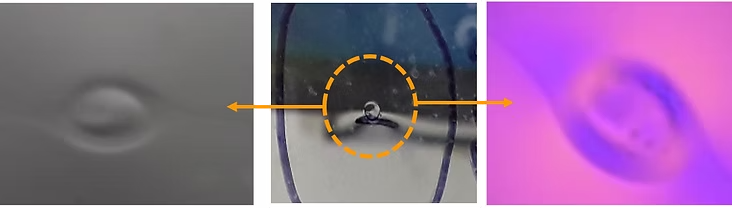
"Knot" defects are vitreous imperfections characterized by off-composition glass encapsulated within nominal soda-lime glass. These defects can arise from a variety of sources, including refractory degradation, raw material inconsistencies, and external pollutants. The project aimed to systematically analyze and trace the sources of knot defects, enabling the implementation of process controls to improve product quality and reduce yield losses.
Methods
- Source tracing — Composition analysis, including the use of X-ray fluorescence (XRF) spectroscopy, was employed to determine the root causes of knot defects.
- Process optimization — Statistical correlation between defect occurrences and process parameters was analyzed to identify optimal manufacturing conditions.
- Defect analysis — A detailed study was conducted using stereo and polarized microscopy to visualize and characterize defects. Defective samples were prepared through grinding and polishing for composition analysis.
Results
- Yield Improvement — A comprehensive understanding of knot defects and their sources led to a 2% reduction in defect-related losses.
- Composition Analysis Using XRF — Developed a methodology for detailed chemical composition analysis using XRF spectroscopy to trace the origins of knot defects.
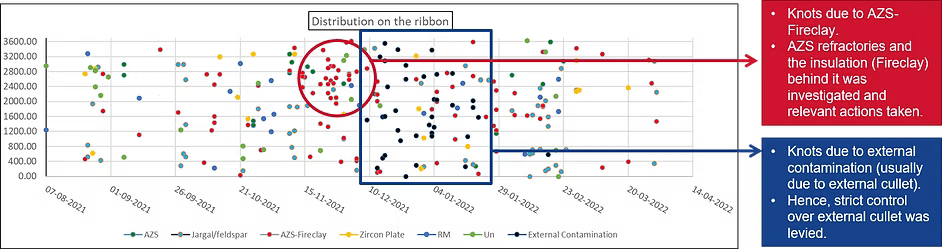
- Identified Defect Sources — Systematic mapping of defect origins enabled the identification of primary contributors to knot defects, allowing targeted corrective actions to reduce occurrences.
- Process Insights — Defects were plotted across the width of the glass ribbon, revealing contamination patterns and enabling focused investigations. A correlation matrix highlighted key process parameters influencing defect formation, resulting in recommendations for optimal manufacturing conditions.